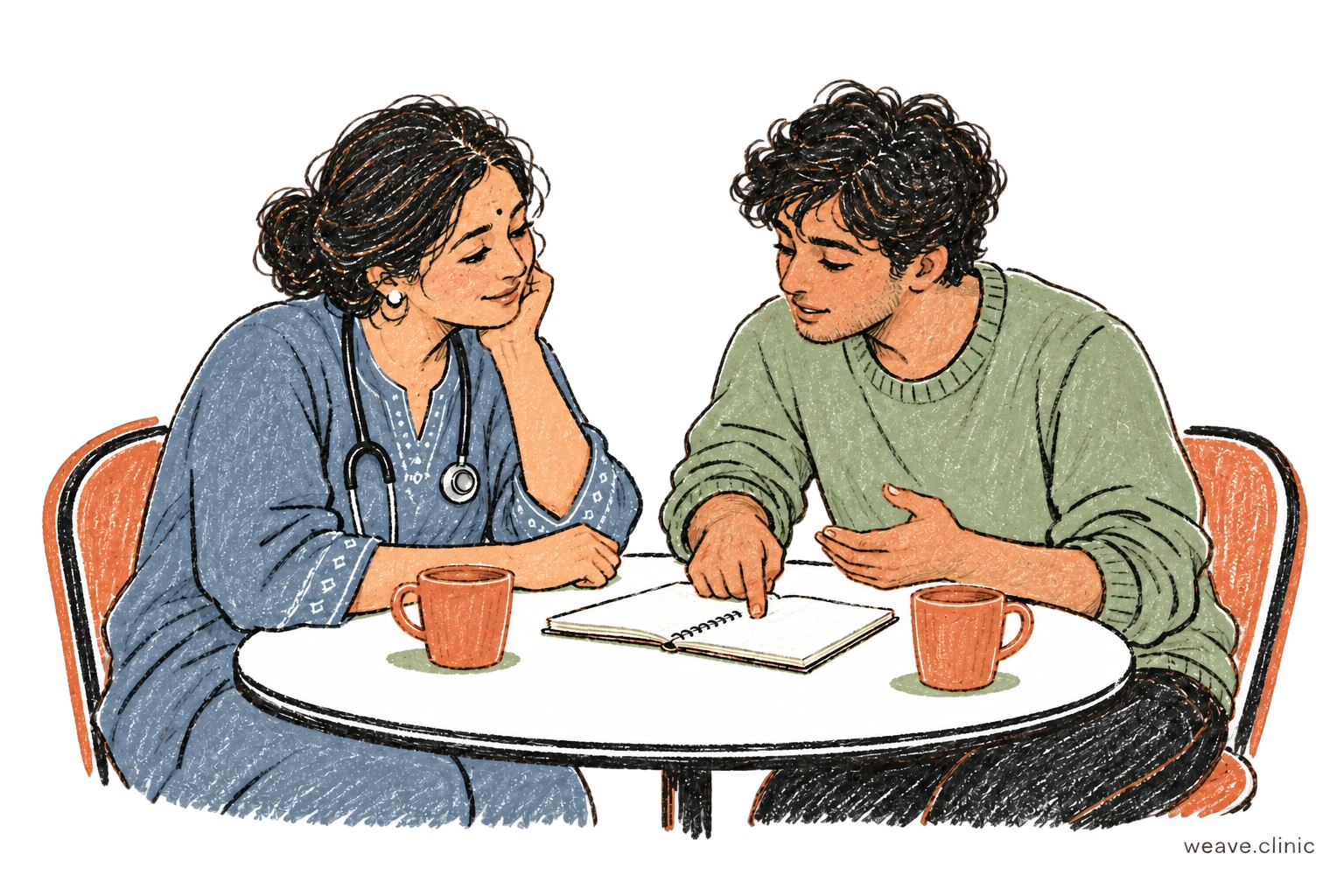
This page is a general guide for men, and for the people who worry about them. It cannot tell you what is happening in your own case. An assessment does that.
Weave offers care with a psychiatrist in Mumbai and online across India. Dr. Niharika Reddy, Consultant Psychiatrist, co-founder and clinical lead, and Dr. Wilfred D'souza, Consultant Psychiatrist, both see men for the concerns on this page.
Why do men wait so long to ask for help?
Many men are taught early that a problem is something you handle alone. Asking for help can feel like admitting the problem won. So it gets put off until after the next deadline, the next festival, the next year.
There are practical reasons too.
- Work leaves little room.
- A man may not have words for what he feels, only a sense that something is off.
- He may worry that seeing a psychiatrist means a label, or medicine for life. Neither follows from one appointment.
The people around him often notice first. A partner says he has gone quiet. A friend sees him drinking more. A colleague finds him short with everyone. If someone has said something like that to you, it is worth reading to the end.
Waiting has a cost. Low mood, worry and heavy drinking each tend to settle in deeper the longer they run. An earlier conversation is usually a shorter one.
What does low mood look like in men?
The textbook picture of depression is sadness and tears. In men it often does not look like that. It can look like a short fuse, a flat voice, longer hours at work, or losing interest in things that used to matter, including sex.
These are the changes clinicians ask about. Many men notice some of them, not all.
- Irritability or anger out of proportion to what set it off
- Losing interest in friends, sport, food or sex
- Sleep that is broken, or much longer than usual
- Tiredness that rest does not touch
- Working far more, or finding work impossible
- Drinking more, or using something to switch off at night
- Aches, headaches or gut trouble with no clear cause
- A sense that the family would manage better without you
Any one of these can have another cause. The pattern, how long it has lasted, and how much of life it is taking up are what a psychiatrist looks at. Our page on depression goes through the choices in care.
Thoughts of ending your life need help today, not at a routine visit. Call 112, or one of the crisis lines at the foot of this page. Asking is not an overreaction.

What about anger, drink and overwork?
Anger, drink and overwork are three common ways men carry distress without naming it. Each works for a while. Each costs more over time.
- Anger. Irritability is one of the more frequent ways low mood and anxiety show up in men. Snapping at the children, shouting in traffic, arguments at home over small things. The anger is real, and it is often sitting on top of something else.
- Drink. Alcohol takes the edge off in the evening and gives it back the next day. Over months it can lower mood, break sleep and raise anxiety on its own. If drink has moved from a choice to a need, that deserves its own conversation. Our page on alcohol use disorder explains what care involves, without judgement.
- Overwork. Staying late is praised, which makes it easy to hide behind. When work becomes the only place a man feels competent, or a reason not to go home, it has stopped being ambition.
None of these is a character flaw. They are strategies, and they can be replaced with ones that cost less. That is part of what the consultation is for.
Is it anxiety, ADHD or burnout?
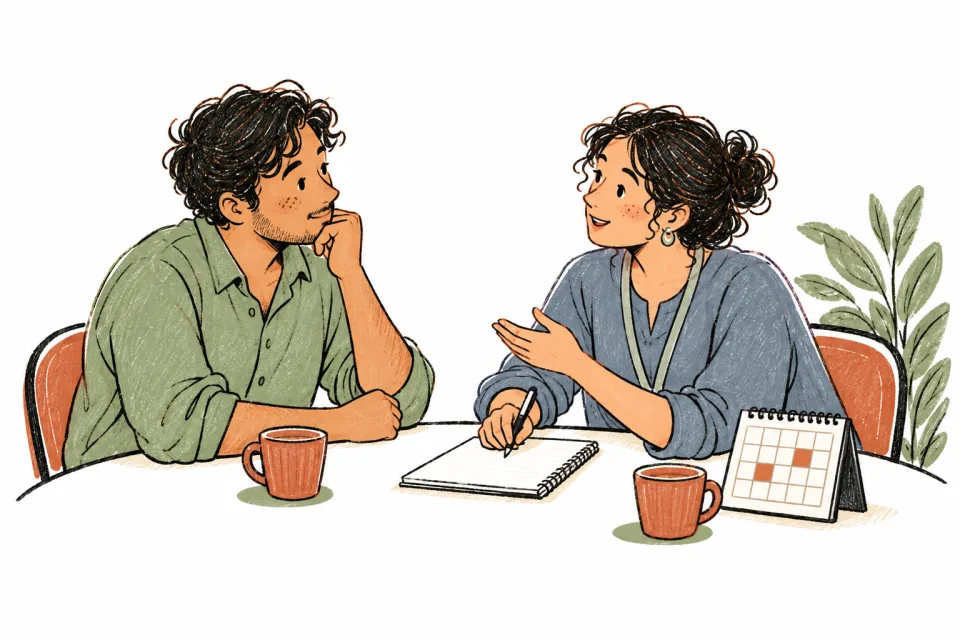
These three are often confused, and they can travel together. Part of a psychiatrist's job in the first consultation is to tell them apart, because the care differs.
- Anxiety is worry that will not switch off, a body on standby, broken sleep and avoidance. In men it often arrives through the body first: chest tightness, gut trouble, palpitations, a round of normal test results. Our anxiety page covers it.
- ADHD in adults is a lifelong pattern, not a recent change: trouble starting and finishing tasks, losing track of time, restlessness, running on willpower since school. Some men first hear the term in their thirties or forties. See ADHD in adults.
- Burnout is exhaustion, cynicism and a sense of being useless at work. It is tied to the job and tends to ease when away from it. It is not a diagnosis in itself, and it can slide into depression if nothing changes.
Sorting these out is practical, not academic. Poor sleep from any of them makes the others worse, so sleep is usually looked at early. Our sleep page explains what helps.
What happens in a first consultation?
A first consultation is a conversation, not a test you can fail. Every session is 20 or 30 minutes, and you choose the length when you book.
- The psychiatrist asks what has changed, when it started, what was going on around that time, and how it has moved since. They ask about sleep, drink, work, relationships, physical health and medicines. They also ask about times of very high energy or mood.
- You will be asked directly about thoughts of suicide. That is routine, and it is asked of everyone. An honest answer helps the plan fit.
- Then comes an explanation, in plain words, of what seems to be going on, and the choices: talking therapy, medicine, both, or a planned wait with a review. Nothing is decided without you. A consultation does not commit anyone to medication.
You can come alone or bring a partner. You can say a question feels too personal and come back to it later. Nothing has to be said in a particular order.
Can I see a man?
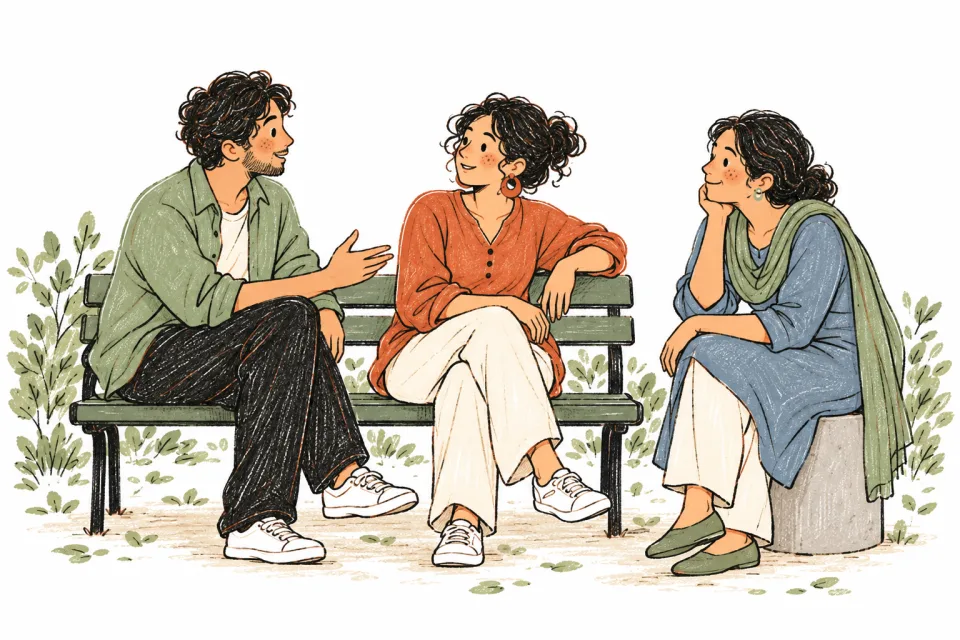
Yes. Men who would rather talk to a man can ask for Dr. Wilfred D'souza, Consultant Psychiatrist, who works alongside Dr. Niharika Reddy, Consultant Psychiatrist, co-founder and clinical lead. Both see men for low mood, worry, drink, attention and sexual health concerns.
- Some men find it easier to start with a woman. That is fine too.
- Say which you prefer when you arrange the appointment.
- Consultations are in English, Hindi, Kannada or Konkani.
How does care for men work at Weave?
Care starts with a consultation with a Consultant Psychiatrist, in person in Mumbai or online across India.
- A 20 minute session is INR 2,200 and a 30 minute session is INR 3,000.
- The fee is the same online and in person.
- Ongoing care means reviews with the same clinician and one plan, adjusted as things change. Some men come for a few sessions and some for longer. That is decided with you, not for you.
- In person, Weave consults at Runwal Forests Clinic, Kanjurmarg West, 1:30 to 3 PM every day including Sunday. The psychiatrist in Mumbai page has the address and directions. The online psychiatrist page explains how video consultations work across India.
- Every fee is listed on the fees page. To arrange a first consultation, use the contact page. A first WhatsApp message can be one line, and it does not need to name the concern. If finances are tight, talk to us.
Which other pages help?
Each of these covers one part of the picture in more detail.
- Depression: what low mood is, and therapy and medicine as choices
- Alcohol use disorder: when drink has become a need, and what care involves
- ADHD in adults: the lifelong pattern, and how an assessment works
- Sleep: why sleep is looked at early, and what helps
- Men's sexual health: erection, timing and desire concerns, and how that consultation runs
- Sexual health: the longer guide, for men and women
- Anxiety: worry that will not switch off, and how care works
Questions people ask
Do I need a diagnosis before I come?
No. Working out whether something needs treatment is part of what the first consultation is for. You can come with a sense that something is off and no name for it.
Will I be put on medication?
Not unless you choose it after a discussion. Talking therapy, medicine, both, or a planned wait with a review are all choices. Some concerns are helped by talking approaches alone, and any medicine is explained before it is prescribed.
Will anyone find out I came?
Your consultation, treatment and records are confidential. Section 23 of the Mental Healthcare Act, 2017 gives you this right, digital records included. The law allows sharing in some cases, such as a threat to someone's life or a court order, and only what is needed.
Can I do this online from outside Mumbai?
Yes. The history, the plan and follow-up can happen by video from anywhere in India. When an examination or local medical care is needed, you will be told plainly.
What if my partner is the one who is worried?
A partner can message first and ask how it works. The appointment itself is yours, and you can come alone or together. What a partner has noticed is often useful in the first consultation.