Who can write
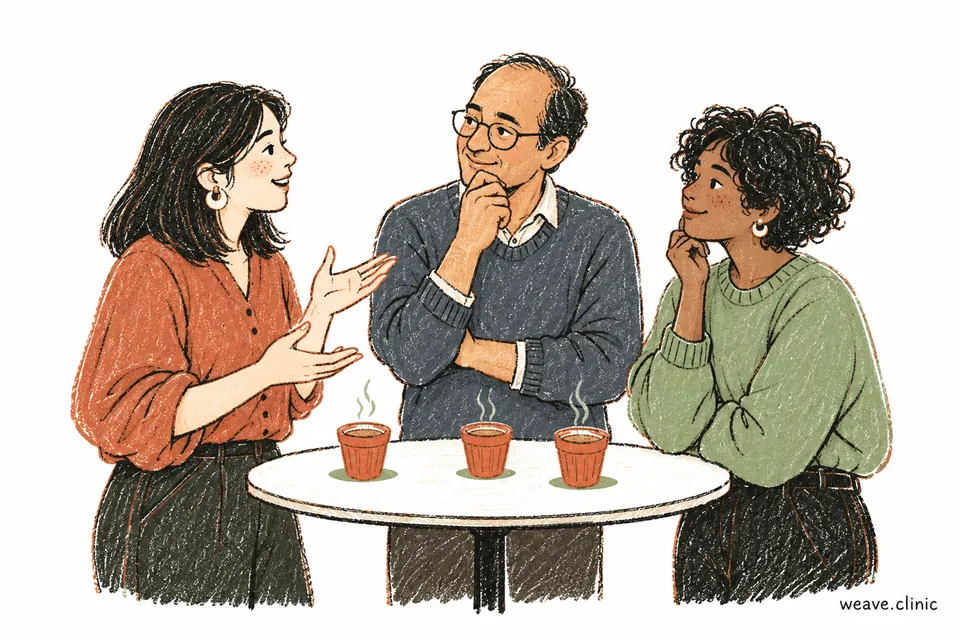
Thread is a Weave publication about understanding one another and working better together in care. Contributions are open to everyone, including psychiatrists, psychologists, trainees, students and people outside these professions. You do not need a clinical qualification, senior title or dramatic story to offer something worth reading.
Useful subjects include assumptions you have reconsidered, questions about learning or care, experiences of collaboration that can be discussed without identifying anyone, and reflections on power or uncertainty. Write from your own perspective without speaking for an entire profession or community. Careful criticism is welcome; praise of either profession is not a condition of publication.
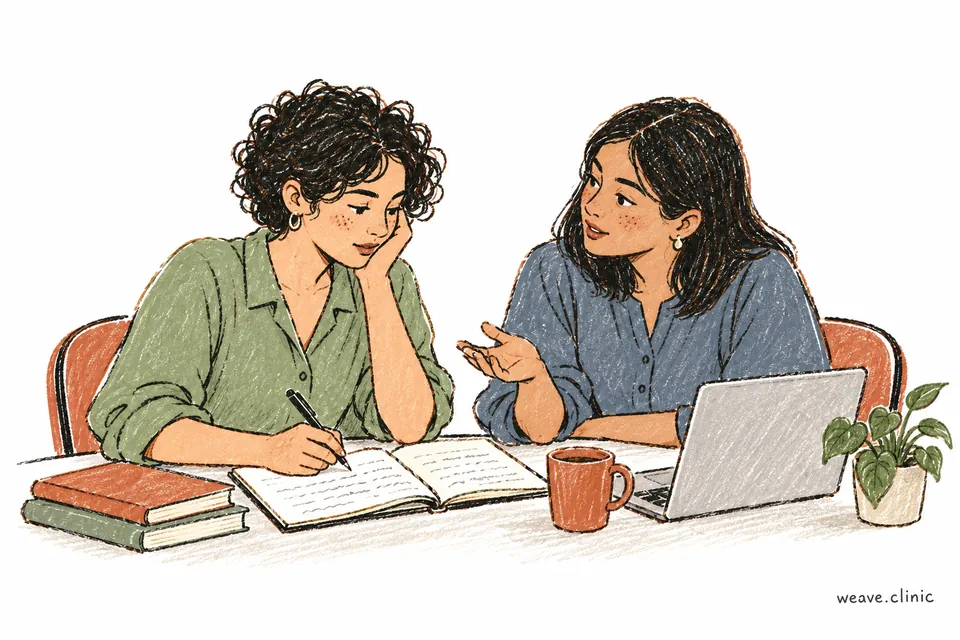
Aim for 700 to 1,000 words in clear language. Give the piece one central question, a few useful headings and a conclusion proportionate to what you actually know. A reflection may leave a question open rather than manufacture a lesson.
What stays out
At launch, Thread accepts reflections and clearly fictional teaching scenarios only. Do not submit real or composite patient cases, even with changed names, consent or identifying details removed. Do not reconstruct a patient conversation from memory or adapt a clinical record into a story.
Do not include information that could identify a patient, colleague, family, institution or private dispute through a combination of details. Focus a professional reflection on your own learning and the general pattern, not on exposing another person. Omit dates, distinctive incidents and unnecessary workplace details.
We do not accept patient photographs, screenshots, recordings or document uploads. There is no case-upload route. Teaching scenarios must be invented rather than assembled from real people and must carry a clear fictional label.
Send a pitch or your full thread
Email wilfred@weave.clinic with the subject Thread submission: your title. You can send a short pitch or a complete 700 to 1,000-word draft. Include your name, a brief and accurate description of your role, field or perspective, and what you hope the reader will understand. Do not include confidential material.
Put your pitch or draft in the email body rather than an attachment. Include a proposed title and a brief author description, stating which details you are comfortable having published. Link to sources where relevant and disclose conflicts of interest and any AI assistance. Private contact information is not part of an author biography.
Do not inflate qualifications or imply an affiliation has endorsed the essay. Tell us about any relevant interest or relationship that could affect how readers understand the piece. Editorial correspondence does not subscribe you to marketing messages.
Authorship and evidence
Submit work you have written and have the right to share. Quotations and borrowed ideas need clear attribution. Link to reliable sources for factual claims where relevant, and distinguish evidence from an interpretation, a personal view or a teaching suggestion.
If you used AI to draft, rewrite or otherwise assist the piece, explain that use in your submission. You remain responsible for every claim, quotation and reference. Do not use AI to invent experiences, create another person's voice or make a fictional story appear autobiographical.
Our launch essays are credited to Weave Editorial. They are AI-assisted editorial writing, not personal accounts attributed to imaginary clinicians. Future contributor bylines will describe the people who actually wrote and approved the work.
What happens during review
Luna or Ra provides AI-assisted screening for possible privacy concerns, clarity, unsupported claims and fit with the publication. Screening is fallible; it cannot certify that a draft is anonymous or safe to publish. Please submit only material that already meets these boundaries.
Wilfred makes the final human editorial decision. He is a psychiatrist at Weave; Thread does not claim that a psychology reviewer or joint editorial board has been appointed. Where a piece requires expertise beyond the available review, publication can wait or be declined.
An editor may ask questions, suggest revisions or decline a submission. There is no guaranteed turnaround or promise of publication. You will be asked to approve the final edited version and its attribution before it goes live.
Rights, corrections and public copies
You retain copyright in your original work. Publication requires your explicit permission for Weave to publish and display the agreed version on Thread on a nonexclusive basis. You remain free to publish your work elsewhere, subject to any separate commitments you make.
Substantive revisions after approval need your agreement. Separate permission will be sought for uses beyond the agreed publication, including promotional excerpts attributed to you. Submitting a pitch or draft is not itself permission to publish it.
For corrections or a withdrawal request, email wilfred@weave.clinic with the article title and the issue. We will consider the request and the appropriate response, including a correction note or removal from Thread where warranted. Once something is public, we cannot guarantee erasure from search caches, archives, screenshots or other people's copies.
Supporting reading
The resources below offer useful background on consent, confidentiality and professional communication online. They are not presented as a statement of Indian law, and Thread's launch policy is narrower: real and composite patient stories are not accepted.
A good contribution helps colleagues think more clearly while preserving the dignity of people who are not part of the conversation. That is the standard we want every piece, including our own, to meet.
Further reading
Send your thread
Email wilfred@weave.clinic with the subject “Thread submission: your title”. Send a short pitch or a complete 700 to 1,000-word draft in the email body. Include your name, a brief role, field or perspective, word count, sources, conflicts of interest, and any AI assistance.
Start your submissionYour email app opens. Thread does not collect or store submissions through this website.