Original publication artwork

The danger ended, so why does my body still react?
An old alarm, not weakness.
Save this one-page guideRead the full bookView at full sizeNew website edition. The original artwork and full book remain available.
Back to all 26 overviewsRead this overview as text
WEAVE FAMILY, ONE PAGE
THE DANGER ENDED. WHY DOES MY BODY STILL REACT?
'A steel cup fell. For a second, the room disappeared.'
This is an old danger alarm, not weakness.
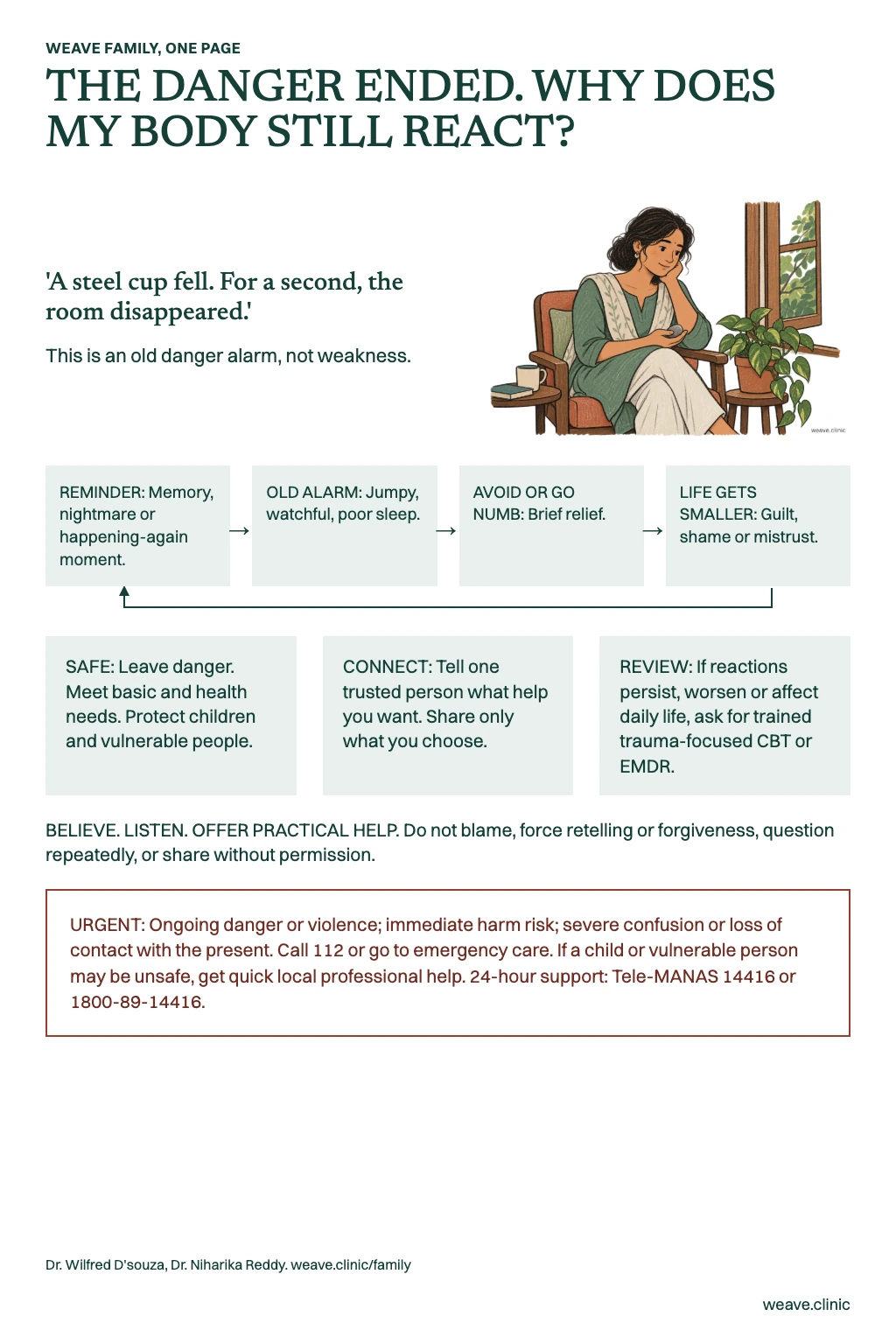
REMINDER: Memory, nightmare or happening-again moment. OLD ALARM: Jumpy, watchful, poor sleep. AVOID OR GO NUMB: Brief relief. LIFE GETS SMALLER: Guilt, shame or mistrust.
SAFE: Leave danger. Meet basic and health needs. Protect children and vulnerable people.
CONNECT: Tell one trusted person what help you want. Share only what you choose.
REVIEW: If reactions persist, worsen or affect daily life, ask for trained trauma-focused CBT or EMDR.
BELIEVE. LISTEN. OFFER PRACTICAL HELP. Do not blame, force retelling or forgiveness, question repeatedly, or share without permission.
URGENT: Ongoing danger or violence; immediate harm risk; severe confusion or loss of contact with the present. Call 112 or go to emergency care. If a child or vulnerable person may be unsafe, get quick local professional help. 24-hour support: Tele-MANAS 14416 or 1800-89-14416.
Dr. Wilfred D'souza, Dr. Niharika Reddy. weave.clinic/family