Original publication artwork

When memory starts to change
Write examples, not arguments.
Save this one-page guideRead the full bookView at full sizeNew website edition. The original artwork and full book remain available.
Back to all 26 overviewsRead this overview as text
WEAVE FAMILY, ONE PAGE
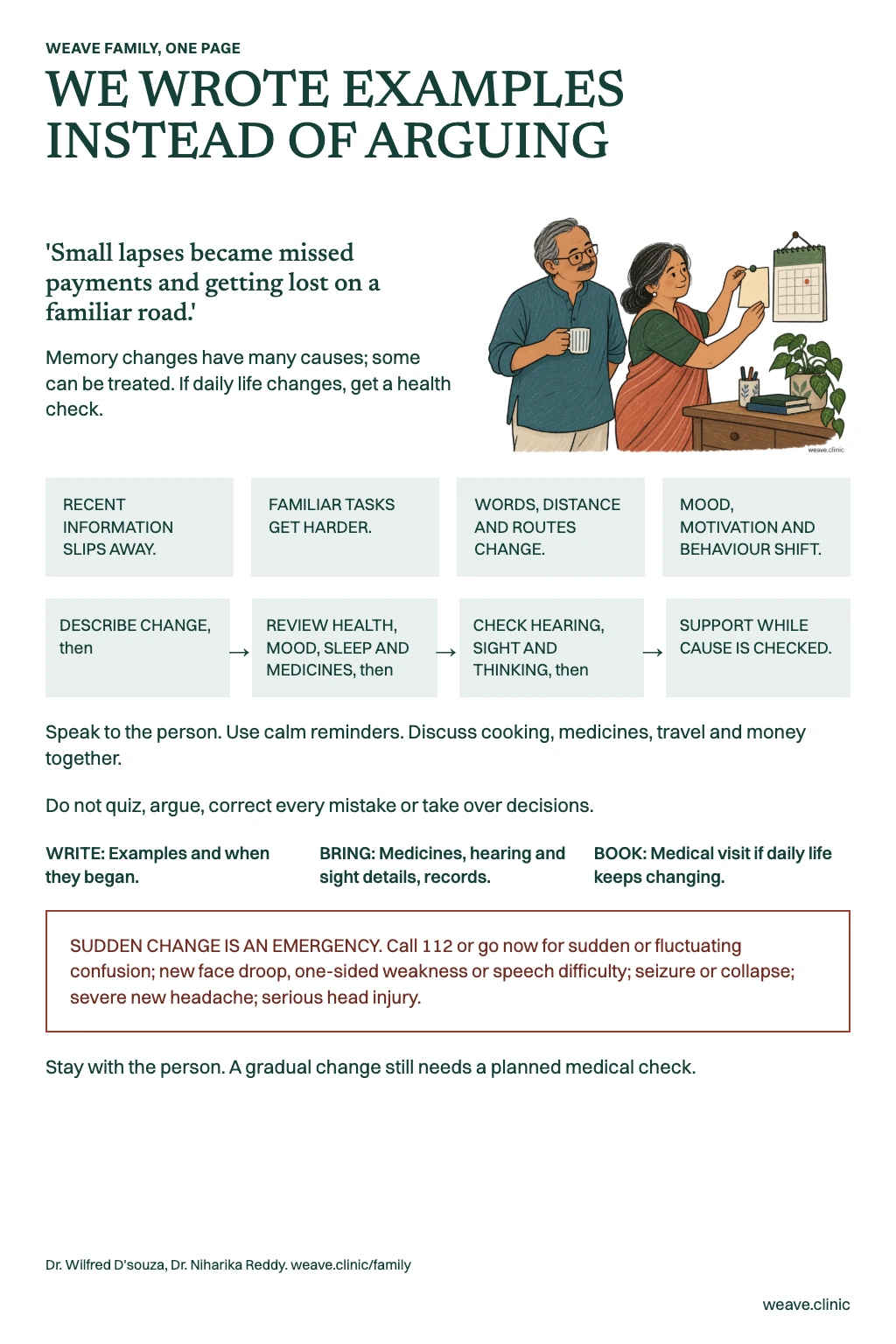
WE WROTE EXAMPLES INSTEAD OF ARGUING
'Small lapses became missed payments and getting lost on a familiar road.'
Memory changes have many causes; some can be treated. If daily life changes, get a health check.
RECENT INFORMATION SLIPS AWAY. FAMILIAR TASKS GET HARDER. WORDS, DISTANCE AND ROUTES CHANGE. MOOD, MOTIVATION AND BEHAVIOUR SHIFT.
DESCRIBE CHANGE, then REVIEW HEALTH, MOOD, SLEEP AND MEDICINES, then CHECK HEARING, SIGHT AND THINKING, then SUPPORT WHILE CAUSE IS CHECKED.
Speak to the person. Use calm reminders. Discuss cooking, medicines, travel and money together.
Do not quiz, argue, correct every mistake or take over decisions.
WRITE: Examples and when they began. BRING: Medicines, hearing and sight details, records. BOOK: Medical visit if daily life keeps changing.
SUDDEN CHANGE IS AN EMERGENCY. Call 112 or go now for sudden or fluctuating confusion; new face droop, one-sided weakness or speech difficulty; seizure or collapse; severe new headache; serious head injury.
Stay with the person. A gradual change still needs a planned medical check.
Dr. Wilfred D'souza, Dr. Niharika Reddy. weave.clinic/family