Original publication artwork

We stopped comparing and started asking
A good assessment finds needs, not a score.
Save this one-page guideView at full sizeNew website edition. The original artwork remains available.
Back to all 26 overviewsRead this overview as text
WEAVE FAMILY, ONE PAGE
We stopped comparing and started asking
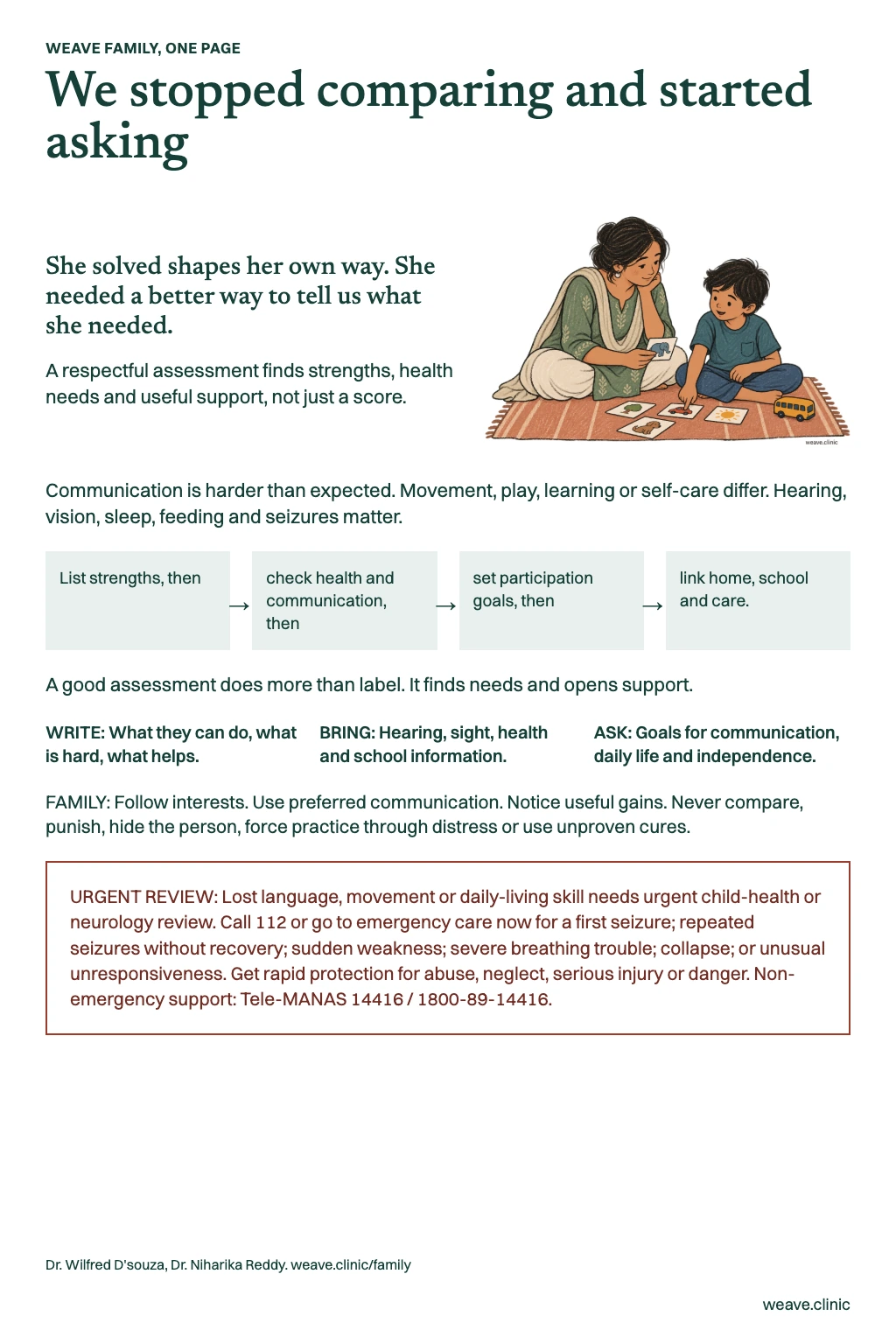
She solved shapes her own way. She needed a better way to tell us what she needed.
A respectful assessment finds strengths, health needs and useful support, not just a score.
Communication is harder than expected. Movement, play, learning or self-care differ. Hearing, vision, sleep, feeding and seizures matter.
List strengths, then check health and communication, then set participation goals, then link home, school and care.
A good assessment does more than label. It finds needs and opens support.
WRITE: What they can do, what is hard, what helps. BRING: Hearing, sight, health and school information. ASK: Goals for communication, daily life and independence.
FAMILY: Follow interests. Use preferred communication. Notice useful gains. Never compare, punish, hide the person, force practice through distress or use unproven cures.
URGENT REVIEW: Lost language, movement or daily-living skill needs urgent child-health or neurology review. Call 112 or go to emergency care now for a first seizure; repeated seizures without recovery; sudden weakness; severe breathing trouble; collapse; or unusual unresponsiveness. Get rapid protection for abuse, neglect, serious injury or danger. Non-emergency support: Tele-MANAS 14416 / 1800-89-14416.
Dr. Wilfred D'souza, Dr. Niharika Reddy. weave.clinic/family