Original publication artwork

When low mood is not getting better
Two weeks is the signal to ask.
Save this one-page guideRead the full bookView at full sizeNew website edition. The original artwork and full book remain available.
Back to all 26 overviewsRead this overview as text
WEAVE FAMILY, ONE PAGE
When low mood is not getting better
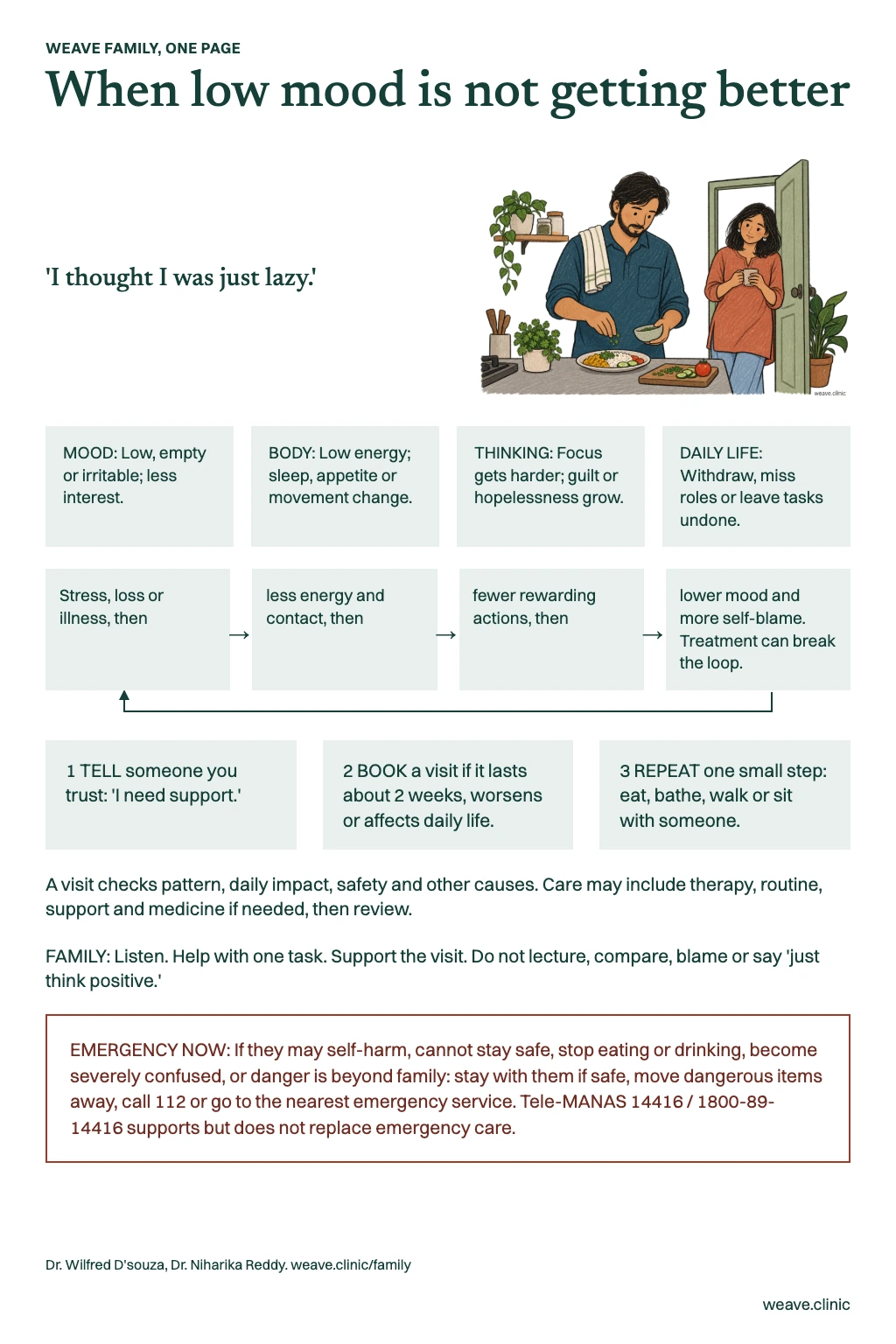
'I thought I was just lazy.'
MOOD: Low, empty or irritable; less interest. BODY: Low energy; sleep, appetite or movement change. THINKING: Focus gets harder; guilt or hopelessness grow. DAILY LIFE: Withdraw, miss roles or leave tasks undone.
Stress, loss or illness, then less energy and contact, then fewer rewarding actions, then lower mood and more self-blame. Treatment can break the loop.
1 TELL someone you trust: 'I need support.'
2 BOOK a visit if it lasts about 2 weeks, worsens or affects daily life.
3 REPEAT one small step: eat, bathe, walk or sit with someone.
A visit checks pattern, daily impact, safety and other causes. Care may include therapy, routine, support and medicine if needed, then review.
FAMILY: Listen. Help with one task. Support the visit. Do not lecture, compare, blame or say 'just think positive.'
EMERGENCY NOW: If they may self-harm, cannot stay safe, stop eating or drinking, become severely confused, or danger is beyond family: stay with them if safe, move dangerous items away, call 112 or go to the nearest emergency service. Tele-MANAS 14416 / 1800-89-14416 supports but does not replace emergency care.
Dr. Wilfred D'souza, Dr. Niharika Reddy. weave.clinic/family