Original publication artwork

When should we ask for help?
You do not need a diagnosis to ask.
Save this one-page guideRead the full bookView at full sizeNew website edition. The original artwork and full book remain available.
Back to all 26 overviewsRead this overview as text
WEAVE FAMILY, ONE PAGE
WHEN SHOULD WE ASK FOR HELP?
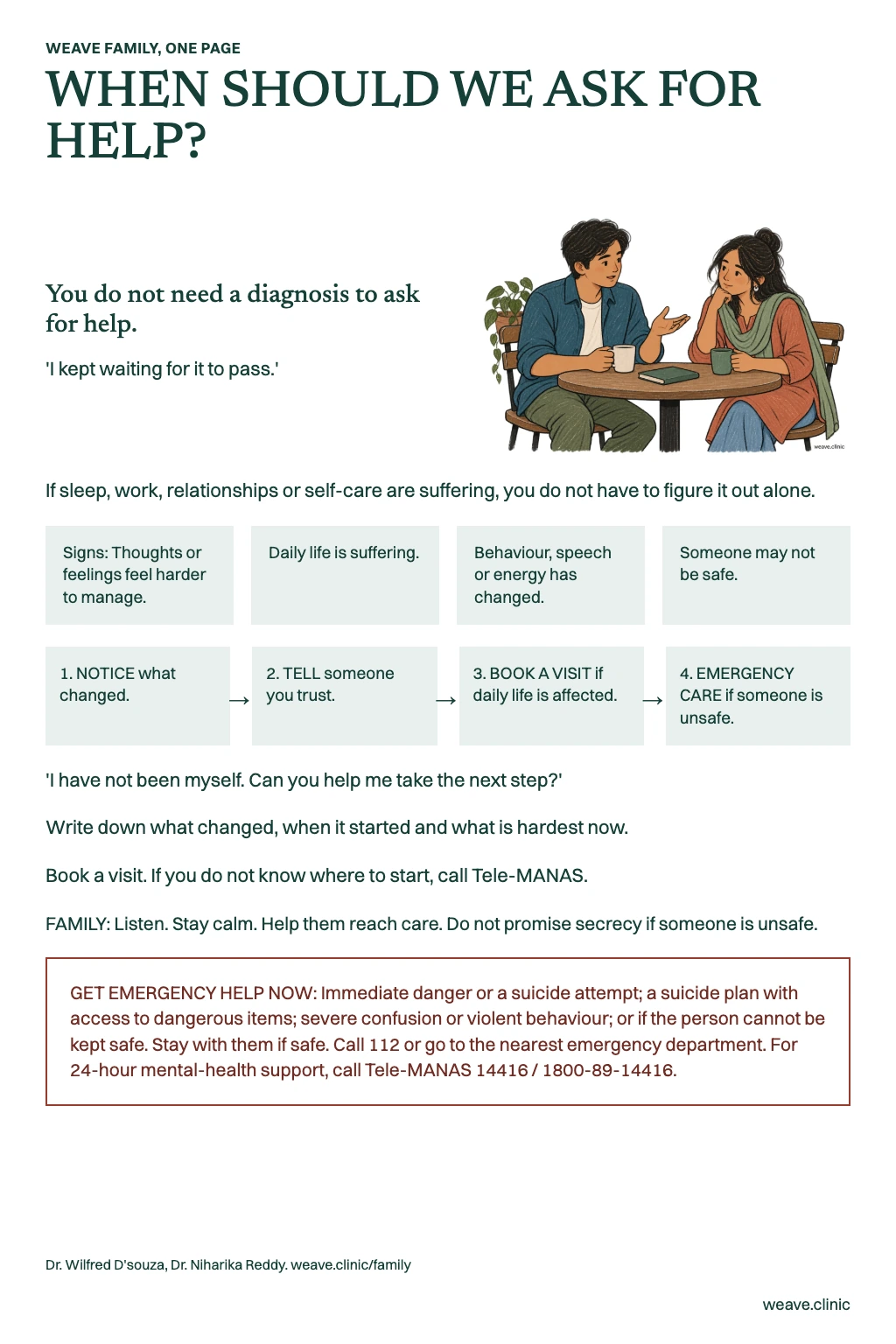
You do not need a diagnosis to ask for help.
'I kept waiting for it to pass.'
If sleep, work, relationships or self-care are suffering, you do not have to figure it out alone.
Signs: Thoughts or feelings feel harder to manage. Daily life is suffering. Behaviour, speech or energy has changed. Someone may not be safe.
1. NOTICE what changed. 2. TELL someone you trust. 3. BOOK A VISIT if daily life is affected. 4. EMERGENCY CARE if someone is unsafe.
'I have not been myself. Can you help me take the next step?'
Write down what changed, when it started and what is hardest now.
Book a visit. If you do not know where to start, call Tele-MANAS.
FAMILY: Listen. Stay calm. Help them reach care. Do not promise secrecy if someone is unsafe.
GET EMERGENCY HELP NOW: Immediate danger or a suicide attempt; a suicide plan with access to dangerous items; severe confusion or violent behaviour; or if the person cannot be kept safe. Stay with them if safe. Call 112 or go to the nearest emergency department. For 24-hour mental-health support, call Tele-MANAS 14416 / 1800-89-14416.
Dr. Wilfred D'souza, Dr. Niharika Reddy. weave.clinic/family