Weave, Centre for Integrative Psychiatry runs an 8-session programme for adults with ADHD, autism or AuDHD, in Kanjurmarg West, Mumbai, and online.It begins after an assessment: eight 50-minute sessions, one to one, once a week.Either Dr. Niharika Reddy, Consultant Psychiatrist, or Dr. Wilfred D'souza, Consultant Psychiatrist, runs your whole programme.There are three editions, for ADHD, autism and AuDHD, with the same eight sessions weighted to fit each one.The first session reads your written summary as a map, not a verdict.Each week you try one small experiment and take home one card.Each session is 50 minutes and costs INR 3,000; sessions are booked one at a time.Safety concerns do not wait for the next session.
ADHD, autism and AuDHD
An 8-session programme for adults with ADHD, autism or AuDHD
Weave runs eight one-to-one sessions for adults after an ADHD, autism or AuDHD assessment, online or in Kanjurmarg West, Mumbai, with one take-home card a week.

- Psychiatry and therapy
- One working day
- English, Hindi, Kannada, Konkani
- Runwal Forests Clinic, 1:30 to 3 PM
In short
What is the Weave programme for ADHD, autism and AuDHD?
Reviewed by Dr. Wilfred D'souza, Consultant Psychiatrist, on 2026-11-03.
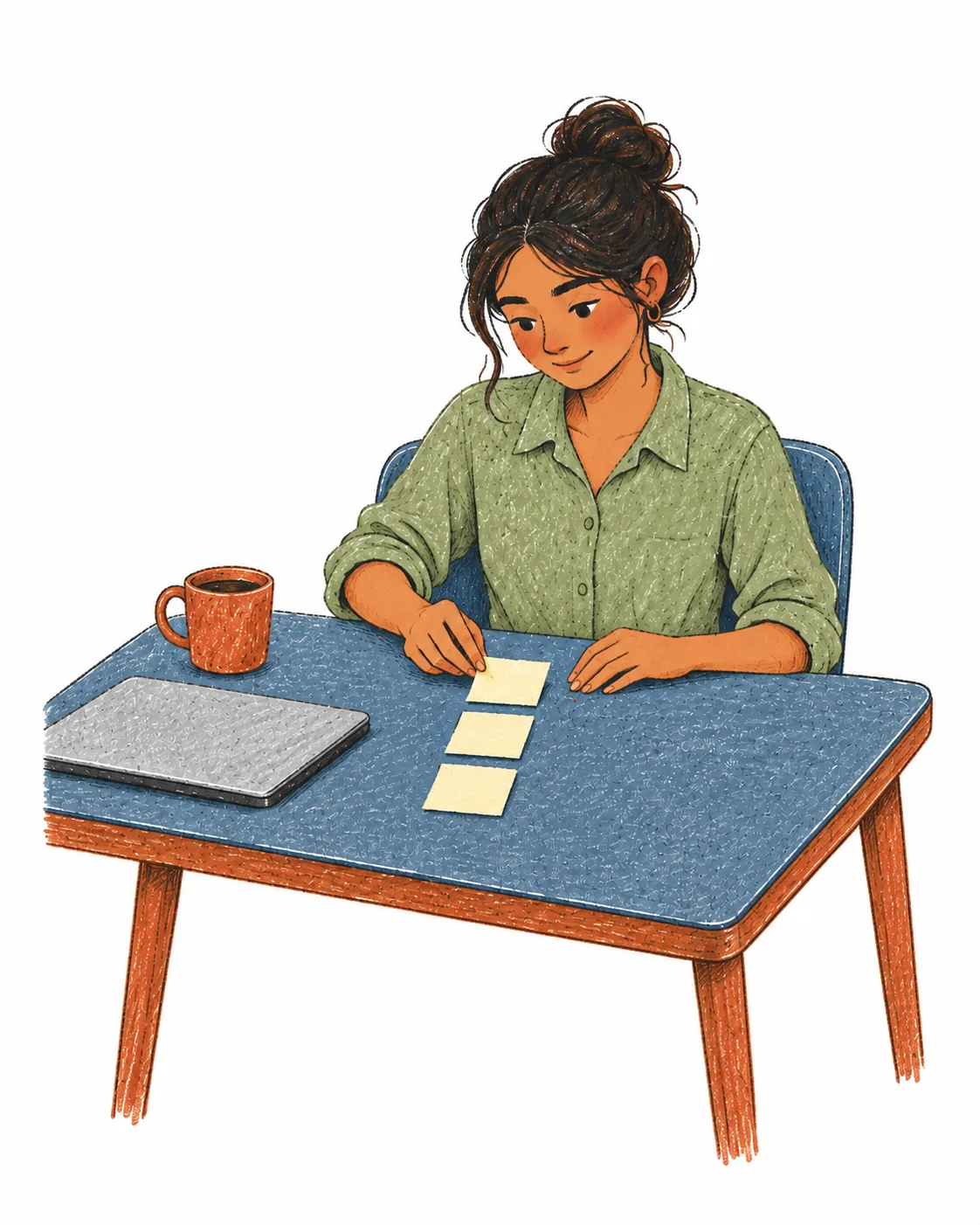
The programme in four facts
What does the programme involve?
Length
Eight 50-minute sessions, once a week, over about two months.
Format
One to one, by video or at Kanjurmarg West. One clinician runs the whole programme.
Fee
INR 3,000 per session, booked one at a time and paid as you go.
Take-home
One card a week, 4 to 6 pages long.
Who it is for
Who is the programme for, and who is it not for?
The programme is for adults, 18 and over, with a written summary that names ADHD, autism or both, from Weave or an outside assessment your clinician accepts. It is not an assessment or crisis care.
After an ADHD assessmentAfter an autism assessmentAuDHD, both togetherDiagnosed elsewhereSelf-identifying: start with a quick consult
Not an assessment
It does not decide whether ADHD or autism fits. An assessment does that; a quick consult is the door to one.
Not crisis care
A crisis, or a sudden change in mood, sleep or thinking, needs a clinical session first.
Not for under-18s
For children and teenagers, the family service at Weave is the place to start.
Not a stand-in for clinical care
If low mood or worry rises, or safety is in question, a clinical session comes first.
Eight stops, one card each
What happens across the eight sessions?
The sessions move from your summary to daily life, then to keeping what helped. Each one has one idea and a card to take home.
Landing
Your summary is a map, not a verdict. Card: One line a day
How your mind runs
The moves make sense once the mechanism does. Card: The state check
Starting and finishing
Starting is a design problem, not a flaw. Card: Five minutes at the door
Attention, time, memory
Put the information outside your head. Card: One home, read daily
Weeks 5 to 8
Body and state
Your body sets the ceiling for the day. Card: Move first
Feelings
A surge is fast; recovery can be planned. Card: The pause phrase
People
Masking costs energy; repair is a skill. Card: Say the plain sentence
Keeping it
Keep what earned its place. Card: The restart plan
These are the ADHD edition's cards; the other two editions carry their own.
One plan, three editions
Is this the same programme for ADHD, autism and AuDHD?
Yes, the eight sessions are the same. Each edition gives more time to what that mind finds hardest, with moves that fit it. AuDHD is the everyday name for having both ADHD and autism, not a separate diagnosis.
ADHD edition
This edition spends longer on starting tasks and keeping track of time. You also learn to check your state before a task.
Autistic edition
This edition spends longer on sensory load and moving between tasks. Masking gets its own space, with recovery planned into the week.
AuDHD edition
This edition works on the double bottleneck: a task must be interesting enough and predictable enough to start. It works with both needs at once.
What a session is like
What is one session like?
Each session is 50 minutes, one to one, and follows the same order every week: a short check-in, one idea, practice in the room and a plan for the week.
50 minutes, one to one
It is you and your clinician, by video or at the clinic.
A landing question
A short question helps you arrive.
A two-question check
Two quick questions ask about mood and safety.
Last week's experiment
You look at what you tried and what got in the way. A week that did not go to plan is information.
One idea in plain words
Your clinician explains one part of how your mind works, without jargon.
One move in the room
You practise the move before trying it at home.
One experiment and your card
You leave with your card and one experiment for the week, with a smallest version and a stop rule. Between sessions, you log one line a day.
Online sessions follow the same order. A short follow-up session is offered about a month after session 8.
Evidence, plainly
Does a programme like this work?
In trials, programmes of this shape clearly raised how much people understood about ADHD or autism. Wider measures, such as life satisfaction, moved less. Weave has no results of its own yet.
PEGASUS, Sweden
A trial of a programme with this shape, not of Weave's programme: eight group sessions for adults with ADHD and someone close to them (Hirvikoski and colleagues, 2017).
Knowledge rose a lot. Life satisfaction did not change reliably. About nine in ten completed. Family members understood more and felt less burdened. The trial is on PubMed as 28641216; the feasibility study is PMC4340972.
Prisma, Sweden
A study of a programme with this shape, not of Weave's programme: four group sessions for autistic adults and people close to them. Knowledge rose a lot.
About one in twelve reported more low mood or worry, so every Weave session opens with a mood check. The study is PMC9389708.
Weave uses short questionnaires at the first and last session, so you can see what moved. For clinicians: WFIRS-S, PHQ-9, GAD-7, three personal goals rated 0 to 10, a knowledge check and an acceptance line.
Weave has no outcome numbers of its own yet. We could not find a published adult programme in India either.
Medicine
Does the programme need medication?
No. The programme runs the same way with or without medicine, and medicine is never a condition for joining.
Session 5 helps you prepare for your next talk with the doctor who looks after your medicine: what to ask, and what to notice.
The programme does not change any medicine or give advice on how much to take. Those decisions are for you and that doctor.
A seat for family
Can a partner or parent join?
Yes, for one session, if you want them there. Session 7 has an optional seat for one partner or parent, who gets a one-page brief first. The session goes ahead either way.
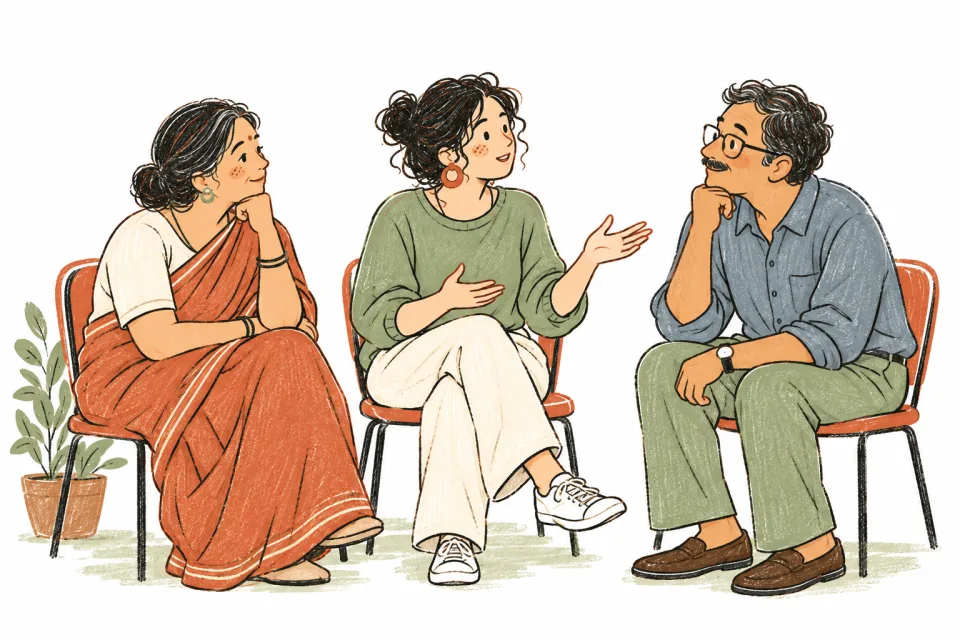
Who runs it
Who runs the programme?
Dr. Niharika Reddy, Consultant Psychiatrist
She works with families and women's mental health, and is a certified couples therapist. In the programme she works one to one, online or in the room.
Dr. Wilfred D'souza, Consultant Psychiatrist
He works with ADHD and mood, and his main therapy approach is Schema Therapy. In the programme he works one to one, online or in the room.
One clinician runs your whole programme.
Cost, stated plainly
How much does the programme cost?
Each programme session is 50 minutes, at INR 3,000 per session. The eight sessions are booked one at a time and paid as you go. If you stop after three sessions, you pay for three.
| Appointment | Length | Fee |
|---|---|---|
| Programme session | 50 minutes per session | INR 3,000 |
| Session | 20 minutes | INR 2,200 |
| Session | 30 minutes | INR 3,000 |
If finances are tight, talk to us. Pay by UPI or card on the fees page, or at the clinic.
What can come up
What can come up during the programme?
Relief, grief and anger
Reading your own summary can bring relief. It can also bring grief, or anger at lost time. All of these are expected; none are required.
Pausing a session
You can ask to pause or stop a session at any point.
When mood or safety changes
If low mood or worry gets worse across two sessions, or there is any safety concern, you are seen in a clinical session the same week.
If something cannot wait, the urgent support block at the foot of this page says who to call.
Common questions
Questions people ask before starting
How is this different from the assessment?
The assessment finds out what is going on and ends in a written summary. The programme starts after that and puts the summary to use in daily life.
Can I start if I was assessed somewhere else?
Yes, if your clinician at Weave accepts the outside assessment. Bring the written summary, and you read it together in session 1.
I think I have ADHD but have no diagnosis; can I join?
Not straight away, because the programme starts after an assessment. Begin with a quick consult or an assessment; the assessment pages below explain each one.
Online or in person?
Either. Sessions run by video or at Runwal Forests Clinic, Kanjurmarg West. They are in English.
Which edition would I be in?
The one that matches your written summary: ADHD, autistic, or AuDHD if it names both. Your top three problems, chosen in session 1, shape each session.
What if I miss a week?
One spare week is built in, so one missed week fits. If more weeks slip, your clinician plans the rest with you.
Do I have to do all eight?
No, you can stop at any point. Sessions are booked one at a time and paid as you go. If you stop after three, you pay for three.
Is there a group version?
Not yet; for now the programme is one to one. A group version may follow later.
Ring the doorbell
A sentence or two is enough
Write what your assessment said and what you want to change. We reply within one working day. Weekend messages are answered by Monday.
Keep reading
Where to read next
Adult AuDHD assessment
How adults are assessed for ADHD and autism together.
Adult ADHD assessment
Focus and starting tasks, assessed in adults.
Adult autism assessment
A lifelong history, read with care.
ADHD in adults
A free, plain guide to adult ADHD.
Family Library
Free guides for adults and families.