
The Parent's Guide
Unusual experiencesYour child and unusual experiences
A warm, plain guide for a parent whose teenager or young adult has begun to hear, see or believe things others do not, and the calm, early steps that help far more than arguing ever could.
Something has changed, and you can feel it
If your teenager or young adult has started to hear, see or believe things others do not, you are not imagining the change. You did not cause it. Help can work better when it starts early, and you can help it start.
It may have crept up slowly. Your son stopped sleeping at night. He keeps his door shut and talks quietly when no one is there. Or your daughter has become sure that people at college are watching her. She checks the windows and will not touch her phone. You try to talk, and it turns into a fight, or into silence.
Some young people begin to hear or see things that others do not. Some come to hold a strong belief that no one else shares, and nothing will shake it. To them, these experiences can feel very real. Noticing the change early is one of the most useful things a parent can do.
The clinical name you may hear for experiences like these is psychosis, or a first episode. Only a doctor can say whether that applies to your child. This booklet will help you understand the change and respond well.
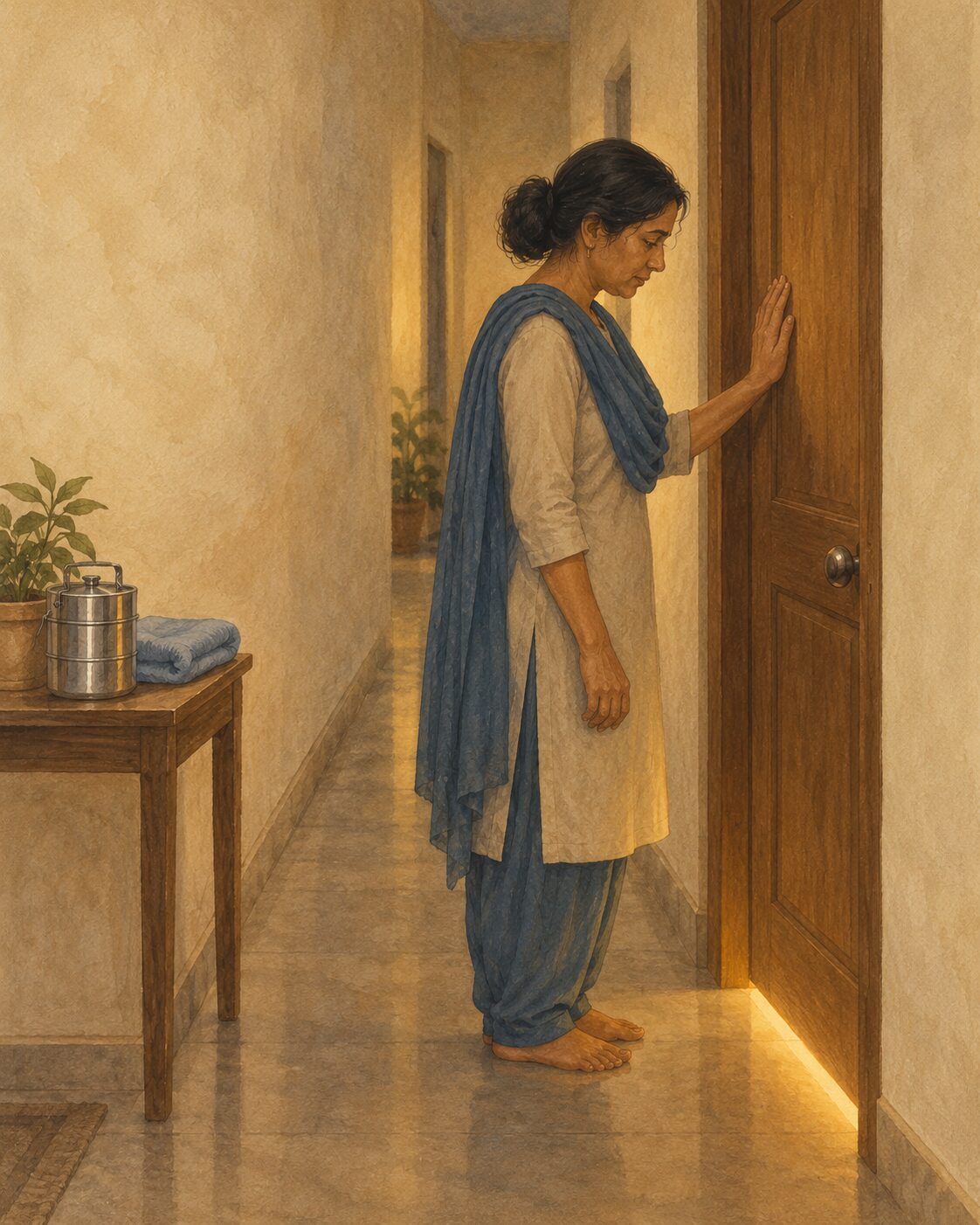
Sunita's son Rohan is 19 and in his first year of college. He was always a quiet, kind boy who loved cricket. Over three months he stopped going to class. He sleeps through the day and paces at night. He told her the neighbours have put something in his phone to listen to him. His father says he is just lazy. His grandmother wants to take him to a healer. Sunita lies awake wondering what she did wrong. She has told no one outside the house.
She did nothing wrong. What Sunita is seeing has a pattern: lost sleep, pulling away, fear, and a belief that will not move. That pattern is a reason to see a doctor soon, not a reason for shame. Some families try prayer or a healer first. You can keep your faith and still take your child to a doctor.
For the next few days, just notice and write it down. When does your child sleep? What do they say they hear, see or believe? When are they calm? Do not argue or correct yet. A short written record helps the doctor.
A sensitive mind under too much strain
These experiences are not bad behaviour, laziness, weak character or a curse. They are a health problem with real causes, not a verdict on your parenting.
Here is a simple way to picture it. Part of the chance of these experiences is inherited, so some people are born more open to them. On top of that, heavy stress, lost sleep, a painful event or drugs such as cannabis can trigger them in some people.
The name you may hear for this picture is the stress-vulnerability model. In plain words, your child is living with a sensitive mind under too much load, not a choice and not a punishment.
It is also not your fault. Many parents quietly blame themselves for being too strict, too soft or too busy. But a very large study of families found that the home children share plays a much smaller part than inherited factors. And nobody chooses the genes they pass on. Hold on to three plain truths. You did not cause it. You cannot cure it alone. But you can help, a great deal.
I stopped asking what I did wrong. I started asking what he needs from me today.
Sunita, mother of Rohan, 19
This is why scolding and arguing rarely help. A young person in the grip of these experiences often does not see that they are not real, and may feel frightened. Pressure can add to that fear.
In many of our homes the verdict comes fast. He is spoiled. Someone has done black magic. Get him married and he will settle. Log kya kahenge, what will people say? These words are wrong. Your child is not a family shame. They are a young person with a health problem that responds to help.
More, if you want it
A word about the fear of violence, because many parents carry it silently. Films often show people with these experiences as dangerous. In fact, violence is fairly uncommon in people going through these experiences. They are more likely to be hurt by others than to hurt anyone. If you ever feel unsafe, or your child talks of hurting someone, get urgent help, as the last section explains. But fear of a label should never keep you from getting help.
The next time you think "he is doing this to us", swap the thought. Try "his mind is under too much strain right now." Notice whether your voice softens. A calmer parent is already part of the help.
Talking without arguing
You cannot argue someone out of a belief that feels very real. You can lower the heat, listen to the fear underneath, and stay on your child's side.
When your child says the neighbours are listening, every part of you wants to prove them wrong. That is natural. But arguing tends to end in a fight, and your child may stop telling you things. Research, mostly with adults, links a lot of criticism or hostility at home with more relapses. Family work seems to help families bring this down. You do not have to agree with the belief to stand beside the person.
- Lower your own heat first: a slow voice, sitting down, one person talking.
- Listen for the feeling under the belief, usually fear, and name it out loud.
- Do not argue with the belief, and do not pretend to agree with it either.
- Agree on one small, practical step, like sleep, food or seeing a doctor.
Here is what that can sound like. "That sounds really frightening. I can see how scared you are." Or: "I do not see it the way you do. But I believe it feels real to you, and I am on your side." Then move gently to what you can share. "You have not slept for days. Can we work on that first?"
Keep the house simple while your child is unwell. Speak one at a time. Keep the TV, the noise and the visitors low. Avoid criticism, teasing and long lectures.
Two more things matter a great deal: sleep and cannabis. Lack of sleep can be one trigger for these experiences. Help your child keep regular times for sleeping, waking and eating. When sleep starts to slip, tell the doctor early.
Cannabis, also called ganja, charas, bhang or weed, needs a plain word. People who keep using it after these experiences begin are more likely to have them come back than people who stop. Alcohol and other drugs can also make things worse.
More, if you want it
Talk about cannabis the same way you talk about the belief: calm and curious, not as an attack. Ask what it does for them. Some people use drugs to cope with the experiences themselves. Tell the doctor honestly, even if it feels shameful. The team can help your child cut down or stop, and find other ways to sleep and settle.
Remember
Connection comes before correction. Keep the door open, even on days when the talk seems to go nowhere.
Pick one sentence from this page and say it aloud when you are alone: "I can see you are scared, and I am on your side." Use it the next time the belief comes up.
Family work helps
The family is not the problem. The family is part of the treatment. Sessions that bring the family in alongside your child may lower the chance of a hard spell coming back.
Doctors may offer something called family intervention, or family work. Over three months to a year, a trained clinician meets the family, with your child where possible. You learn about these experiences, the treatments and ways to support your child. You practise solving everyday problems as a team, including what to do if a hard spell returns. Studies, mostly with adults, suggest family work may mean fewer relapses and hospital stays. UK guidance for young people says every family should be offered it.
Go in as a teammate, not as someone on trial. A good team does not blame the family. They see you as the people who know your child best, and who will be there long after any appointment ends.
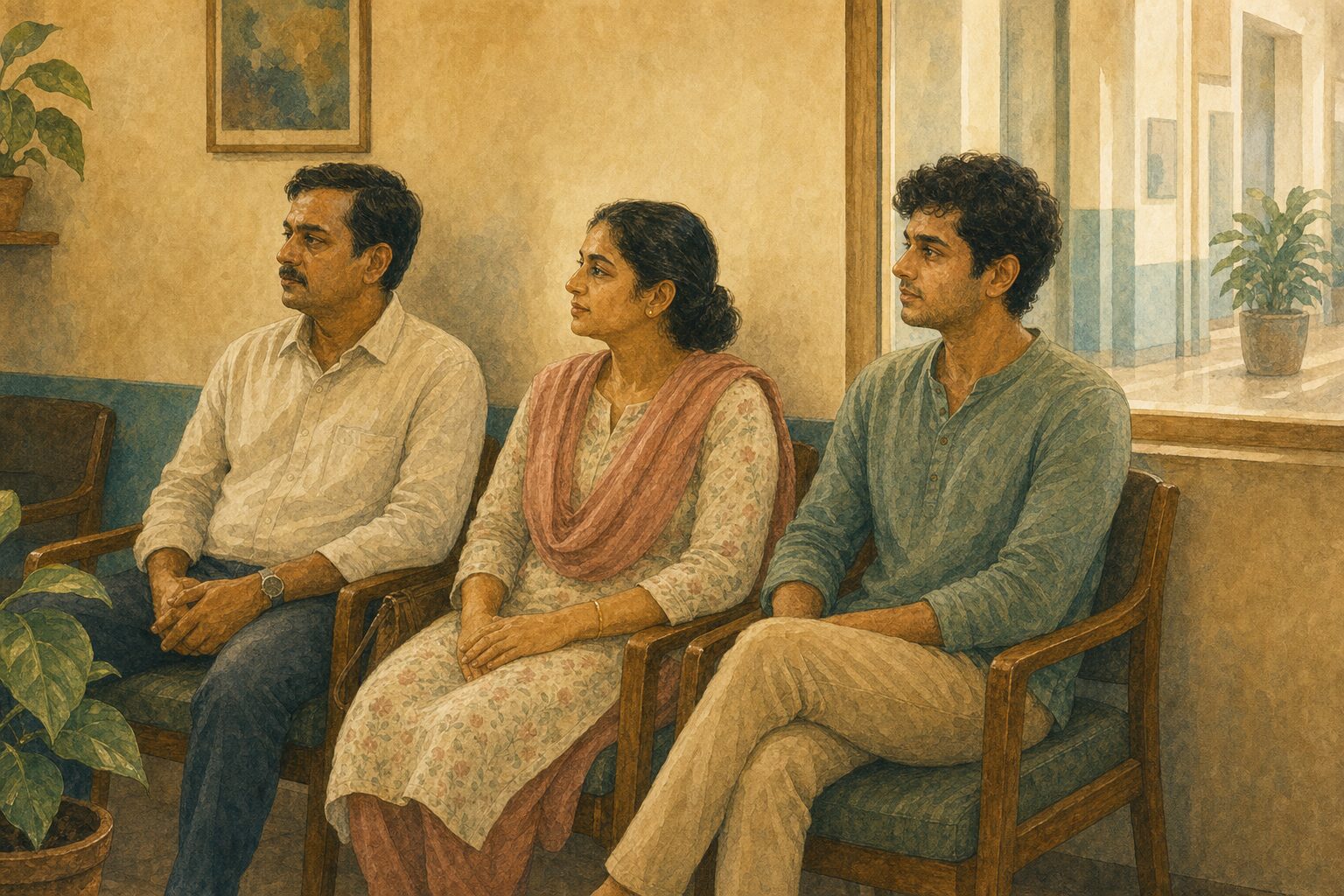
When the team suggested family sessions, Rohan's father did not want to come. "He needs medicine, not us," he said. He came anyway. By the third session he had stopped arguing about the neighbours. He started saying, "I hear you. Let us get you some sleep tonight." Rohan began to sit with the family at dinner again. His grandmother still says her prayers for him. Now she also reminds him about his appointments.
More, if you want it
If you live as a joint family, ask the team whether grandparents, an uncle or an elder sibling can join a session. One shared understanding is easier than five different opinions. If a separate family programme is not available near you, ask the psychiatrist for a family meeting anyway.
Write down the people at home who are closest to your child. Mark the one or two who could come to a family session. At the next visit, ask the doctor whether family work is possible.
You are carrying a lot
Caring for a young person through these experiences is hard, and the fear and tiredness you feel are real. Looking after yourself is not selfish. It is part of helping your child.
Parents in your place carry broken sleep, constant worry and a grief that is hard to name. You may be mourning the plans you had for your child. You may feel shame, then guilt for feeling it. None of this means you are weak. Support for the parent is part of the care, not a luxury on top of it. UK guidance asks the team to consider parents' own support needs in a crisis, and to support them if their child is admitted.
Your own body needs the basics too. Eat, sleep when you can, and take short breaks. Share the night watch with someone else. A rested parent finds it easier to stay calm.
In a joint family the pressure can multiply. Your in-laws or relatives may blame your parenting. Some may want to hide it. Others may push marriage, a healer or a stricter hand. You do not have to win every argument. A short, steady line helps: "The doctor is helping us, and we are following a plan."
More, if you want it
Do not forget the other children in the house. Brothers and sisters may have worries of their own. A few honest words help: their sibling is unwell, the family is getting help, and they are still loved. Find one person on your own side too, a partner, a sister, a friend. Saying the hard part out loud to someone who does not judge makes it lighter.
In your corner
On the nights you lie awake listening for footsteps, hear this. A parent who reads a whole booklet to understand their child is not failing. You are standing beside your child through one of the hardest things a family can face. That is love, and it counts.
This week, hand one task to someone else, even a small one. Ask a relative to sit with your child for an hour, or to handle the neighbours' questions. Then use that hour for yourself, without guilt.
Early help, and when it cannot wait
Do not wait for things to get worse. Help that starts early can work better. If your child talks of harming themselves or anyone else, get urgent help today.
Care usually has several parts working together. These may include medicines a psychiatrist may suggest, a talking therapy made for these experiences, family work, and help getting back to college or work. In some countries, an early-help team, called an early intervention service, brings these parts together.
Reaching out early matters: UK guidance says a young person with these experiences should see a specialist without delay. Where there is no such team near you, a psychiatrist can still bring the parts together. Asking for help is not giving up on your child. It is the opposite.
What about medicines? For a first episode, they are usually one part of the plan, used alongside talking therapy and family work. They should be started by a specialist or on a specialist's advice, not bought over the counter. Like any medicine, they can have side effects, such as weight gain, drowsiness or shaking. A good doctor explains these, checks for them, and adjusts the plan with you.
Remember
Do not start, stop or change these medicines on your own, even when your child seems better. Stopping in the first year or two after a hard spell carries a high risk of the experiences coming back. Any change is planned with the doctor and made slowly. The choice is made together, and you and your child stay part of every decision.
More, if you want it
You do not need every answer before the first visit. Bring your notes: sleep, what your child says, what has changed, and any cannabis or alcohol use. If your child will not come, go yourself first. A doctor can still guide you on the next step.
Most days, your job is to stay close and keep in touch with the doctor. But people going through these experiences have a higher than average risk of self-harm and suicide. If you see the signs below, or think your child may be at risk, get urgent help. It is better to seek help you did not need than to miss a moment that mattered.
Talk of dying or self-harm.
Any talk of ending their life, or of hurting themselves, needs help now.
Voices urging harm.
If the voices tell them to hurt themselves or someone else, do not wait.
Acting on a frightening belief.
Running away, refusing all food or water, or doing something dangerous because of a belief.
Days without sleep, or sudden confusion.
Several nights with no sleep, or not knowing where they are.
If you are worried about suicide, ask directly and calmly: "Are you having thoughts of ending your life?" Asking does not put the idea in their head. Stay with your child and keep your voice low. Reduce access to things that could be used to hurt themselves. In immediate danger, call 112 or go to the nearest hospital emergency. For support and advice at any hour, call Tele-MANAS, the free government mental-health helpline, on 14416.
Many young people who feel lost in these experiences can find their way back to study, work and ordinary days, with early help and a family on their side.
Write down the two or three changes that worry you most, with one real example of each. Save the Tele-MANAS number, 14416, beside them on your phone. Having both ready makes the first call, and the first appointment, calmer and more useful.
Where this comes from
This guide helps you recognise and understand. It is not a diagnosis. For that, see a professional.